
Relapse remains a risk due to the chronic nature of addiction, where the brain’s reward system seeks familiar patterns under stress or emotional strain. Triggers are internal or external cues that reignite the desire to use substances and emerge when least expected. Emotional distress, social pressure, boredom, overconfidence, and relationship conflict are among the causes of relapse.
Relapse occurs because addiction is based on behavioral patterns and coping mechanisms. Unmanaged stress, unresolved trauma, or reexposure to substance-related environments create overwhelming urges. Identifying and managing triggers early helps prevent relapse. A clear, personalized strategy allows for greater control and resilience in challenging moments. Recognizing the 10 most common relapse triggers in addiction recovery builds self-awareness and supports a stronger, stable path forward in recovery.
1. HALT: Hungry, Angry, Lonely, Tired
Hungry, Angry, Lonely, Tired (HALT) describes high-risk situations for patients in recovery. Awareness of HALT allows one to remain vigilant in preventing entry into the state.
Avoiding being too hungry, angry, lonely, or tired must align with the commitment to making recovery the main priority. A strict sleep schedule, meal planning, and attendance at support groups are needed.
2. Emotions
Perceived negative emotions lead people to use drugs or alcohol in the first place, and easily lead a person back to their drug of choice.
Sadness, anger, guilt, and loneliness are unavoidable every time. Experiencing these emotions is normal and essential to recovery and life, but they are uncomfortable. Learning how to cope with your emotions as they arise without the use of drugs and alcohol helps in early recovery.
3. Stress
Stress is the number-one addiction relapse trigger because of its broad range of effects on the mind and body. HALT leads to stress and other circumstances specific to each participant. Losing a job or loved one, increased responsibility at home or work, and health problems increase stress. Stress prevention requires being proactive and mindful of what causes stress.
4. Over-confidence
Over-confidence in recovery puts the patient at risk for relapse. Self-confidence is necessary, but becoming over-confident to the point of complacency crosses a line from healthy confidence to over-confidence and relapse risk.
The more time spent in recovery, the less likely it is to feel the need to adhere to the relapse prevention plan. The confidence in addiction recovery leads to complacency. Patients feel secure in their progress and begin taking greater risks, even while stepping away from the structured support of a recovery program, which is a definite recipe for disaster.
Stay humble by giving back to others if possible, and constantly be reminded that addiction is a chronic disease. Moderation remains unattainable, even when being resilient in recovery and unable to have “just one.”
5. Mental or physical illness
Mental or physical illness increases vulnerability to relapse during recovery. Depression, anxiety, and other underlying mental illnesses trigger drug or alcohol relapse. Physical illness and pain put patients at risk for relapsing, as the body is stressed.
Prescription drugs for mental and physical illnesses are mind-altering and trigger addiction and addiction relapse. Sharing being in recovery with the doctor and being insistent about providing non-addictive prescription drug alternatives is important.
Get treatment for any underlying mental illness and monitor thinking and feeling with a journal to help notice when slipping into old patterns.
YOU DESERVE TO BE
Happy
6. Social isolation
Social isolation slowly weakens the foundation of recovery, making it harder to maintain sobriety. Reluctance to reach out to others, or form a sober support system through AA or another recovery group, leads to social isolation and loneliness. The more the patient becomes socially isolated, the easier it is to rationalise drug or alcohol use to themselves.
Increasing social isolation creates an environment where substance use becomes easier to justify. Harmful patterns seem more reasonable over time without external support or connection.
7. Sex and relationships
Sex and relationships become distractions or substitutes for substances during the recovery process. A common, but ignored suggestion is to avoid dating in recovery for the first year. Multiple factors contribute to the effect of dating, including the heightened relapse risk associated with new romantic relationships. A breakup with a new partner leads back to using due to emotional stress. A potential crossover from the initial addiction to a sex or love addiction, or using relationships to fill the void left by sobriety, creates increased risk for relapse.
Consider why relationships must be avoided during early recovery. These tips for dating in recovery help patients with more than a year of sobriety ensure the transition into dating does not sabotage their sobriety.
8. Getting a promotion or new job
Getting a promotion or a new job is a milestone in recovery and introduces new emotional and psychological challenges. Positive life events are overlooked as relapse triggers. Getting a promotion or a new job leads to an urge to celebrate. Falling into the false idea that celebrating with a drink or drug, ‘just this once’, is acceptable. Increased income triggers thoughts of being able to afford the drug of choice.
Promotions and other positive events are exciting and boost confidence, but bring added responsibilities, pressure, and stress. Plan how to celebrate without drugs and alcohol before getting into a situation.
9. Reminiscing about or glamorising past drug use
Reminiscing about or glamorising past drug use distorts reality and weakens the commitment to sobriety. Relapse is a process. Reminiscing about times of drinking or use in a way that overlooks the pain and suffering the addiction caused is a major red flag.
Reminiscing leads the addictive brain to take over once again. Talking about past usage leads to thinking about future use, and quickly turns into action.
The pattern of reminiscing must not be ignored! Talk to a sponsor, counsellor, or supportive friend about it to help focus on why recovery is chosen.
10. Social situations or places where drugs are available
Social situations or places where drugs are available create high-risk scenarios for relapse. A common relapse trigger is being in situations where drugs and alcohol are available. Driving through a shabby neighbourhood or smelling a pub while walking by triggers intense urges to use.
Relapse prevention plans must include a list of people, places, and things that personally trigger. Think outside the obvious and ask a sponsor or counsellor for assistance to avoid being caught off guard by an emotion, sight, or smell.
Why do People Relapse?
People relapse because addiction alters brain function, making sustained recovery an ongoing challenge rather than a one-time achievement. Cravings and physical dependence emerge as powerful forces that influence behavior even after periods of sobriety. The brain’s reward circuitry becomes conditioned to associate substances with relief, pleasure, or emotional escape, which increases vulnerability during high-stress situations. Grief, anxiety, or loneliness weakens resolve and clouds judgment, leading to impulsive decisions. The lack of a strong support system makes it difficult for patients to maintain accountability and encouragement, which are necessities of long-term sobriety. Exposure to triggers such as specific environments, people, or routines activates strong memory associations tied to substance use, increasing the risk of relapse without structured coping strategies.
Relapse is not inevitable, but a recognized risk during recovery due to the complex interplay of psychological, environmental, and biological factors. Poor coping skills, such as avoidance, denial, or self-isolation, reduce the ability to handle adversity healthily. The definition of addiction is a chronic, relapsing disorder described by compulsive drug seeking, continued use despite harmful consequences, and long-lasting changes in the brain. Depression, trauma, and unresolved anxiety are mental health issues that co-occur with addiction, which complicates recovery and increases the risk of recurrence. Successful long-term recovery depends on building resilience through therapy, medication when appropriate, and daily habits that reinforce sobriety. Relapse does not indicate failure but signals that treatment approaches require adjustment or additional support.
What are the Stages of Relapse?
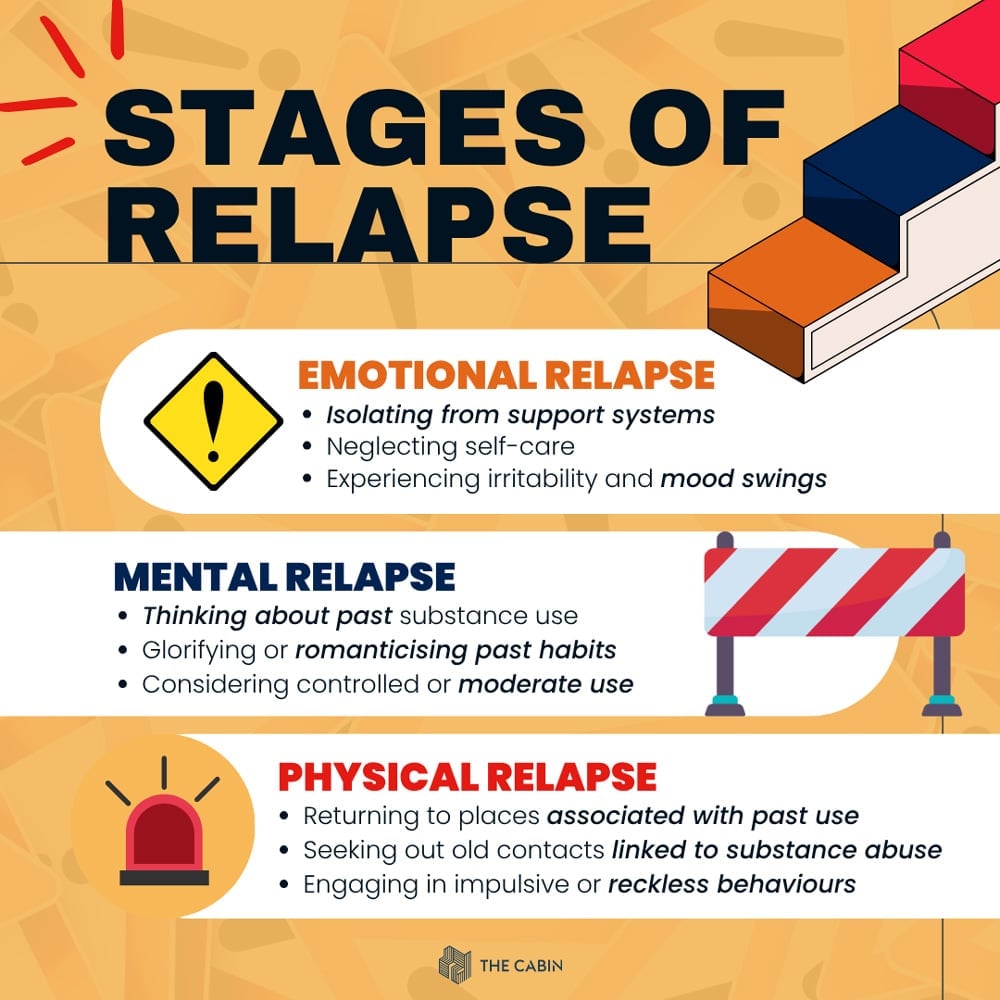
The stages of relapse are listed below.
- Emotional Relapse: Emotional relapse begins before any conscious thought of using substances returns. Individuals experience stress, mood swings, isolation, and disrupted sleep while denying or avoiding emotional support. These behaviors weaken self-care and lay the groundwork for relapse progression. The signs of emotional relapse are listed below.
- Isolating from support systems.
- Neglecting self-care.
- Experiencing irritability and mood swings.
- Mental Relapse: Mental relapse involves an internal struggle between staying sober and returning to substance use. Thoughts about past use, cravings, and rationalizing drug or alcohol consumption begin to dominate mental space. The stage includes fantasizing, planning, or minimizing the consequences of future use.
- Thinking about past substance use.
- Glorifying or romanticizing past habits.
- Considering controlled or moderate use.
- Physical Relapse: Physical relapse occurs when a person returns to substance use after a period of abstinence. The stage represents the outward behavior that follows emotional and mental warning signs. Physical relapse requires immediate intervention to prevent long-term setbacks.
- Returning to places associated with past use.
- Seeking out old contacts linked to substance abuse.
- Engaging in impulsive or reckless behaviors.
What Types of Addiction Have the Highest Relapse Rates?
The types of addiction that have the highest relapse rate are listed below.
- Opioid Addiction: Opioid addiction has a relapse rate of 80 to 90% due to severe physical dependence, disrupted brain reward systems, intense cravings, and environmental triggers, making ongoing treatment and support required for recovery.
- Alcohol Addiction: Alcohol addiction has a relapse rate of 68%, driven by psychological dependence, social acceptability, emotional triggers, and withdrawal symptoms, making structured support essential for long-term recovery.
- Cocaine Addiction: Cocaine addiction has a 60% relapse rate, due to psychological dependence, intense cravings, emotional triggers, and cue-induced cravings, with compulsive thinking reinforcing addictive patterns.
- Methamphetamine Addiction: Methamphetamine addiction has a relapse rate of 88%, due to brain function disruptions and psychological impairments. Methamphetamine addiction is an addiction type where recovery requires long-term behavioral therapy because of the drug’s neurological effects and relapse triggers.
- Nicotine Addiction: Nicotine addiction has a relapse rate above 85%, causing withdrawal symptoms and physical dependency, making sustained recovery difficult without intervention.
1. Opioid Addiction
Opioid addiction has one of the highest relapse rates, between 80% and 90%, due to intense physical dependence and persistent cravings. The brain’s reward system becomes severely disrupted by opioids, which reinforces compulsive drug-seeking behaviors long after detox. The chronic nature of opioid addiction, combined with long-term brain changes, makes it difficult for previous users to maintain abstinence without continuous medical and psychological care.
Emotional stress, pain, and environmental cues such as places associated with use serve as strong relapse triggers of opioid addiction. The body’s tolerance and withdrawal symptoms contribute to a high risk of return. Opioids hijack neurotransmitters like dopamine, making natural pleasure sources insufficient, which leaves users vulnerable to relapse in the absence of ongoing treatment and support. Relapse triggers are prominent in opioid addiction due to the body’s memory of euphoria, emotional trauma, and frequent exposure to pain, which heighten the urge to use.
2. Alcohol Addiction
Alcohol addiction presents a relapse rate of 68%, driven by its deep psychological grip and widespread social acceptability. Emotional stress, peer pressure, and availability serve as common triggers during holidays or social events. The fact that alcohol is embedded in cultural and personal rituals makes avoiding exposure to it a constant challenge. The regularization of high-risk environments in daily life makes relapse prevention more difficult without clear boundaries and coping mechanisms.
Changes in mood, sleep disturbances, and post-acute withdrawal symptoms of alcohol addiction, such as anxiety and depression, increase relapse vulnerability. The ability of alcohol to affect judgment and lower inhibitions complicates efforts to maintain long-term abstinence without structured support and relapse prevention strategies. The ease of access, legal status, and role in social bonding contribute to repeated exposure, reinforcing the difficulty of breaking the cycle.
3. Cocaine Addiction
Cocaine addiction has a relapse rate of 60%, due to its strong psychological dependence and rapid dopamine spikes. Intense cravings, mental health struggles such as depression, and exposure to stress provoke a return to use. A cocaine addiction relapse is driven less by physical withdrawal symptoms and more by compulsive thinking and emotional triggers. The fast-acting and short-lived high encourages repeated use, which reinforces addictive patterns. Cue-induced cravings from visual or social reminders of previous use periods act as hurdles in recovery without consistent behavioral intervention.
Cocaine triggers are embedded in reward systems and emotional memory, making them more resistant to change without structured therapy and long-term support. The high relapse rate reflects how the brain rewires around anticipation and emotional relief, making it difficult to maintain abstinence in familiar or high-pressure environments. Relapse triggers for cocaine addiction include nightlife settings, interpersonal conflict, financial stress, and feelings of isolation, which intensify compulsive drug-seeking behavior.
4. Methamphetamine Addiction
Methamphetamine addiction relapse rates approach 88%, due to long-lasting changes in brain function and severe emotional dysregulation. Chronic use damages areas responsible for decision-making and impulse control, which undermines recovery efforts. Psychological symptoms such as paranoia, anhedonia, and cognitive impairments make relapse prevention extremely difficult. Environmental stress, isolation, and unresolved trauma serve as major triggers when combined with the drug’s ability to create intense euphoria. Recovery from methamphetamine addiction requires long-term behavioral therapy, as the brain’s healing process is slower compared to other substances.
The high relapse rate reflects how methamphetamine disrupts brain chemistry and behavior patterns, making triggers more powerful and recovery more unstable. Triggers for methamphetamine relapse are intensified due to the drug’s firm psychological grip, intense cravings, and the emotional crash that follows its use. The combination of mental health deterioration and powerful environmental cues makes methamphetamine one of the hardest addictions to overcome.
5. Nicotine Addiction
Nicotine addiction has a relapse rate above 85%, reflecting its potent habit-forming properties and constant social exposure. Seeing others smoke, stress, boredom, and boredom after meals make consistent abstinence challenging. Nicotine alters brain chemistry to create physical dependency and psychological routines, such as smoking during breaks or while driving. The initial withdrawal symptoms of nicotine addiction, such as irritability, anxiety, and difficulty concentrating, make the cessation process vulnerable. The high relapse rate highlights the difficulty of overcoming nicotine use, as relapse triggers for nicotine are embedded in routine behaviors and social interactions.
Nicotine’s integration into daily habits makes sustained recovery difficult without behavioral modifications and pharmacological aids. Nicotine presents unique challenges due to its legal availability, visibility in public settings, and rapid reinforcing effects on mood and focus.
Stay
Strong
in Sobriety
With our
support!
How to Deal with Addiction Relapse Triggers in Recovery?
To deal with addiction relapse triggers in recovery, identify personal triggers, set boundaries, engage in healthy coping strategies, maintain a strong support network, and prioritize self-care to reinforce long-term sobriety. Establish structured coping mechanisms and maintain a proactive approach to long-term sobriety. Emotional distress, environmental influences, and social pressures contribute to relapse risk, making awareness essential for sustained recovery. Stress, isolation, and exposure to past substance-use environments reinforce cravings, requiring intentional intervention. Identifying triggers in recovery allows for early recognition of warning signs, such as mood fluctuations, compulsive thoughts, and behavioral shifts. Support networks, therapy, and consistent routines strengthen resilience against relapse. Behavioral strategies, including mindfulness practices and avoiding high-risk situations, provide stability in recovery.
Developing effective coping mechanisms ensures uninterrupted progress. Physical activity, creative outlets, and structured daily routines offer alternative sources of fulfillment, reducing reliance on substances. Professional guidance, whether through counseling or peer support groups, reinforces accountability and emotional well-being. Long-term recovery depends on continuous self-awareness and adaptive strategies that address underlying triggers. Prioritizing mental health and maintaining structured relapse prevention plans sustains progress and minimizes setbacks in the recovery journey.
Can you Avoid Addiction Relapse Triggers?
Yes, you can avoid addiction relapse triggers. Avoiding high-risk situations such as parties with substance use, unsupportive environments, or toxic relationships reduces exposure to emotional and environmental cues that lead to relapse. Establishing a structured relapse prevention plan supports long-term recovery by identifying personal triggers and outlining strategies to manage stress, cravings, and emotional setbacks. The plan includes practical tools such as setting boundaries, practicing mindfulness, attending therapy, and building a reliable support network. Proactively managing triggers strengthens decision-making, reinforces coping skills, and creates a safer path toward sustained sobriety.
Avoid addiction relapse triggers by following the six steps below.
- Identify Personal Triggers. Recognize the people, places, emotions, or situations that increase the urge to use substances. Keeping a journal helps track patterns and understand which environments pose a higher risk. The awareness forms the foundation for avoiding high-risk situations and making safer decisions.
- Develop Healthy Coping Skills. Practice strategies such as deep breathing, exercise, or creative outlets to manage stress and negative emotions. Replacing harmful responses with positive actions builds resilience over time. Consistent use of healthy coping tools strengthens mental and emotional balance.
- Set Strong Boundaries. Establish clear limits with friends or family who encourage or enable substance use. Protecting recovery requires prioritizing mental health and avoiding exposure to unsafe influences. Boundaries create a safe space for healing and personal growth.
- Build a Support System. Stay connected to therapists, sober peers, or recovery groups for guidance and accountability. Supportive relationships reinforce motivation and provide practical feedback during challenging moments. Regular interaction with trusted allies reduces isolation and builds encouragement.
- Create a Daily Routine. Structure daily activities with consistent sleep, meals, exercise, and responsibilities. Stability reduces boredom and minimizes the opportunity for relapse thoughts to take hold. A well-planned routine supports discipline and a sense of purpose.
- Prepare a Relapse Prevention Plan. Develop specific steps to follow when facing cravings or high-risk situations. The plan must include emergency contacts, distraction techniques, and reminders of personal recovery goals. Preparation empowers confident responses in moments of vulnerability.
When is Treatment Needed for Addiction Relapse?
Treatment is needed for addiction relapse when a previous user returns to regular substance use, signaling a loss of control and a potential slide into harmful patterns. Affecting personal or social lives, feeling helpless or out of control, and being unable to quit are signs that need prompt treatment. Hiding or denying use indicates a deepening struggle, as honesty with self and others becomes compromised. A decline in mental health, such as increased anxiety, depression, or emotional instability, signals the need for professional intervention.
The immediate treatment of substance abuse is necessary if relationships, work, or school responsibilities suffer as a result of substance abuse to prevent damage. Addressing relapse at its first signs ensures the best chance for recovery and prevents a full return to addiction.

Inpatient rehab is needed when addiction disrupts daily functioning, poses health risks, or when previous outpatient efforts have failed. Structured residential treatment becomes essential for users facing intense withdrawal symptoms, co-occurring mental health disorders, or unsafe living environments.
Inpatient care provides 24-hour medical supervision, psychological support, and a focused, distraction-free setting.
Luxury addiction treatment rehabs such as The Cabin offer evidence-based treatments and personalized care in a tranquil setting. Private accommodations, holistic treatment programs, and qualified specialists contribute to a comprehensive recovery experience. Inpatient rehab supports long-term recovery by building strong foundations in a controlled, supportive environment.
At The Cabin, we’re here to help you stay sober.
Aftercare and relapse prevention are essential, and we invite you to join our Peer Support Network recovery group in Australia.
